

Payriff.
One designer, a whole payments ecosystem: a design system built from scratch, and the mobile app, merchant dashboard, CRM and payment experience on top of it.
Payriff, an online payments platform for businesses. As the only designer, I built its design system and designed the mobile app, merchant dashboard, CRM and payment experience.
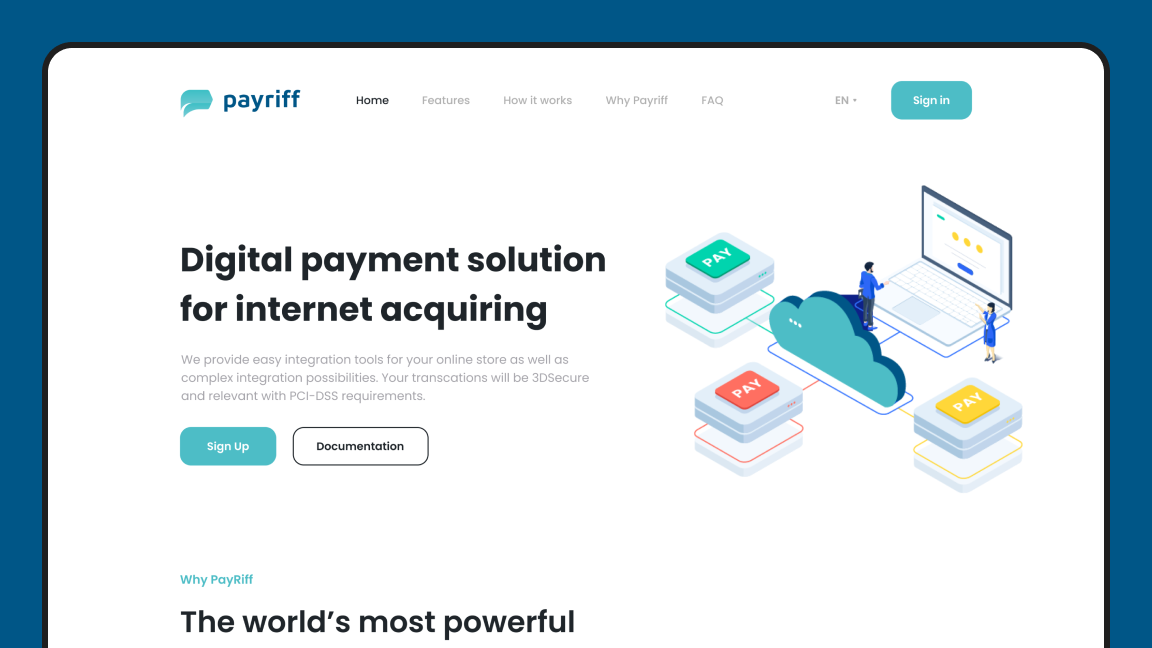
Challenge
Working as the only designer meant handling the mobile app, merchant dashboard and internal tools in parallel. Each had different requirements, and the dashboard also needed a second version with simpler flows and a clearer layout.
What I did
Designed the mobile app, both dashboard versions, checkout, multipay, CRM and documentation website. Created the UI kit and design system from scratch, and reworked the dashboard’s main flows for V2.
Impact
The work gave Payriff a consistent interface across its mobile and web products. Dashboard V2 introduced simpler flows and a clearer layout, while the shared component library gave the team a base for ongoing updates.
01
Context
Payriff helps businesses accept online payments and manage transactions, invoices and refunds. Its products serve customers making payments, merchants running their businesses and internal teams managing operations. As the sole designer, I worked across the mobile app, merchant dashboards, checkout, CRM, documentation and landing pages. My role covered both new products and the redesign of existing ones, supported by a shared design system.
02
The problem
Payriff’s products were being developed in parallel, with different teams needing different things from design. Customer checkout needed a focused payment flow, while merchant and internal tools had to accommodate detailed financial information and daily operations. The challenge was to support these differences without creating disconnected interfaces, while redesigning the dashboard for V2 and keeping up with ongoing feature requests.
Constraints
- One designer, several products
- Parallel teams with different needs
- Fast release cycles
- Payment security standards
03
Goals
Business goals
- Give every Payriff product one design language
- Ship new features faster with limited resources
- Move merchants from Dashboard V1 to a simpler V2
User goals
- Merchants: track transactions, refunds and invoices easily
- Customers: a clear, trustworthy payment experience
- Internal teams: find merchant information and manage applications clearly.
04
Products
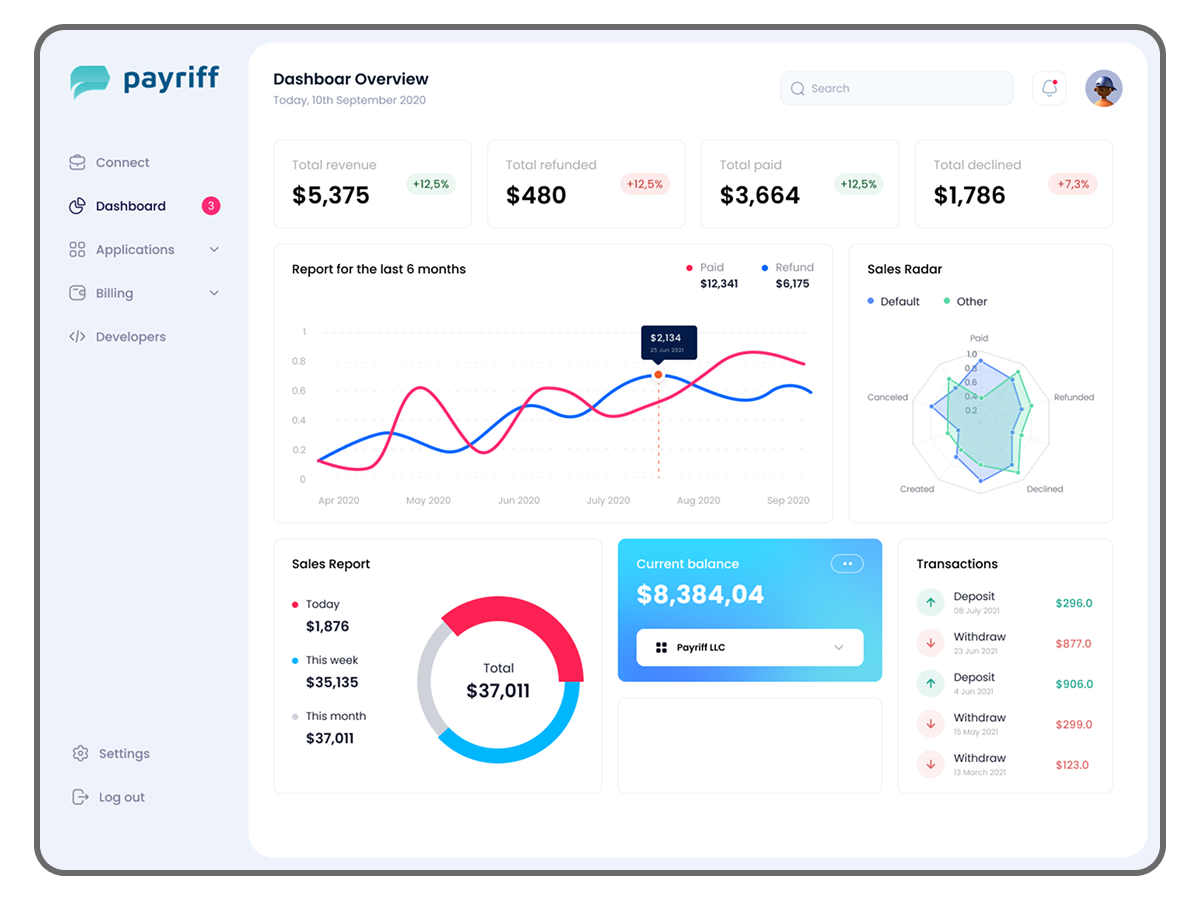
Merchant Dashboard V1
The first version brought payment activity, revenue, balances and transaction history into one workspace, giving merchants an overview of their online business.
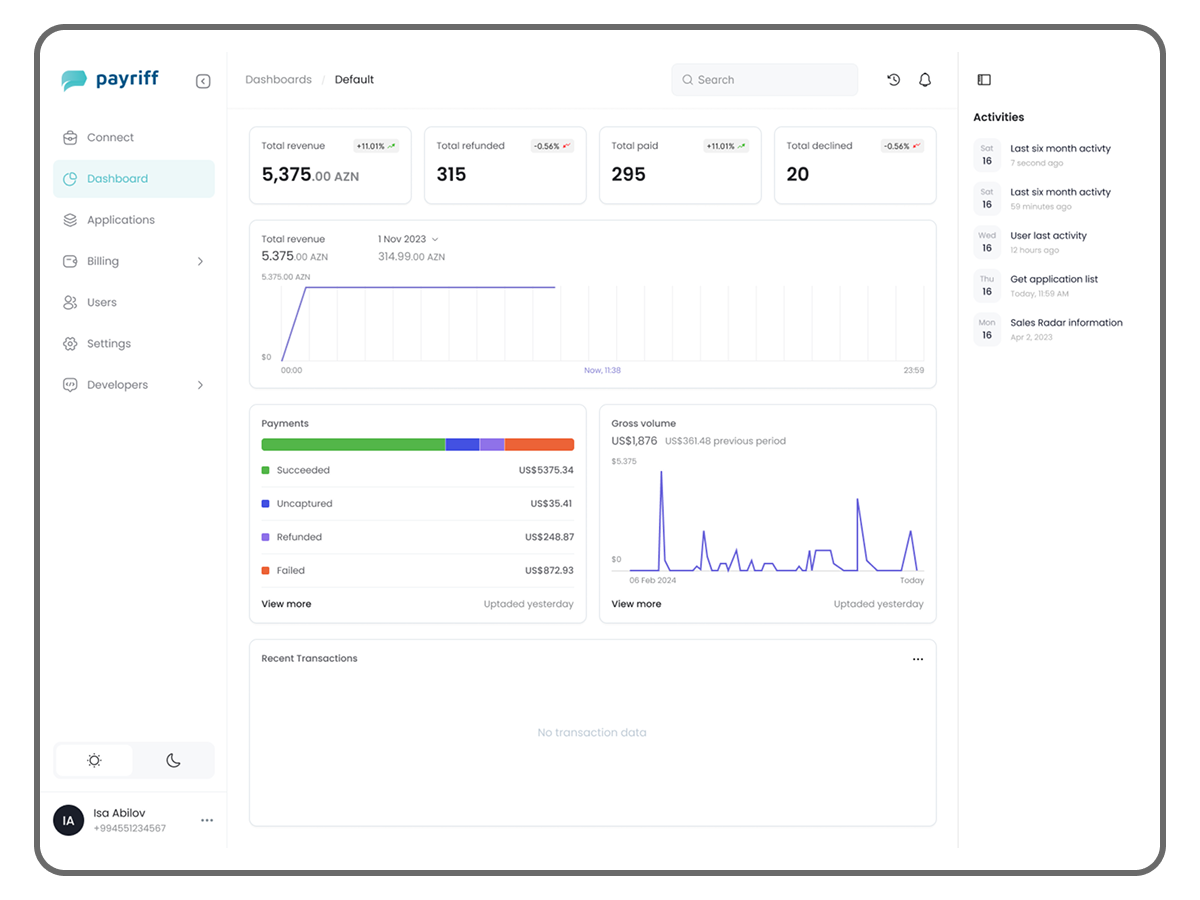
Merchant dashboard V2
The second version refined the dashboard’s structure and visual hierarchy. Transactions, refunds and invoices were organised into clearer flows, with a more focused overview of payment performance.
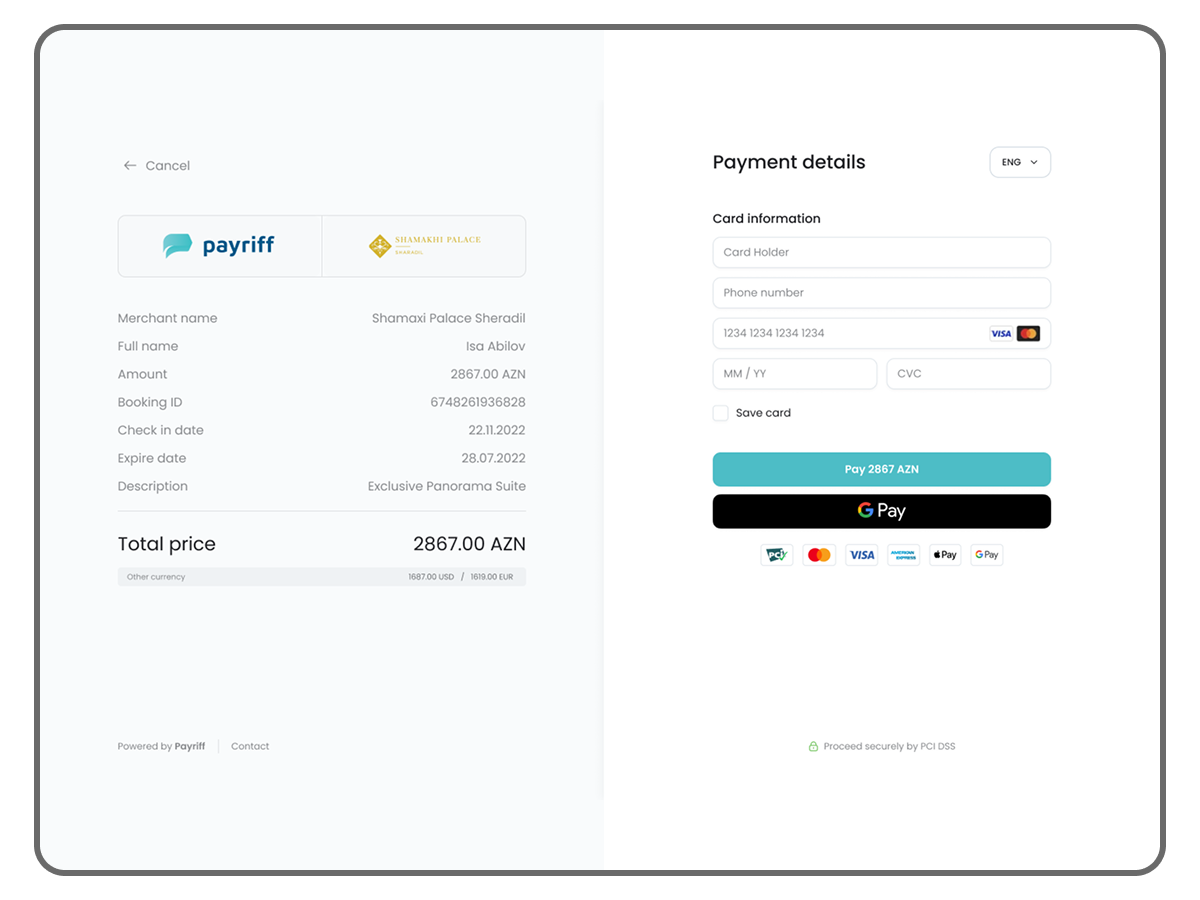
Pay Payriff
A focused payment page that brings the merchant, order details and total amount together. Customers can review what they are paying for and complete the payment by card or Google Pay.
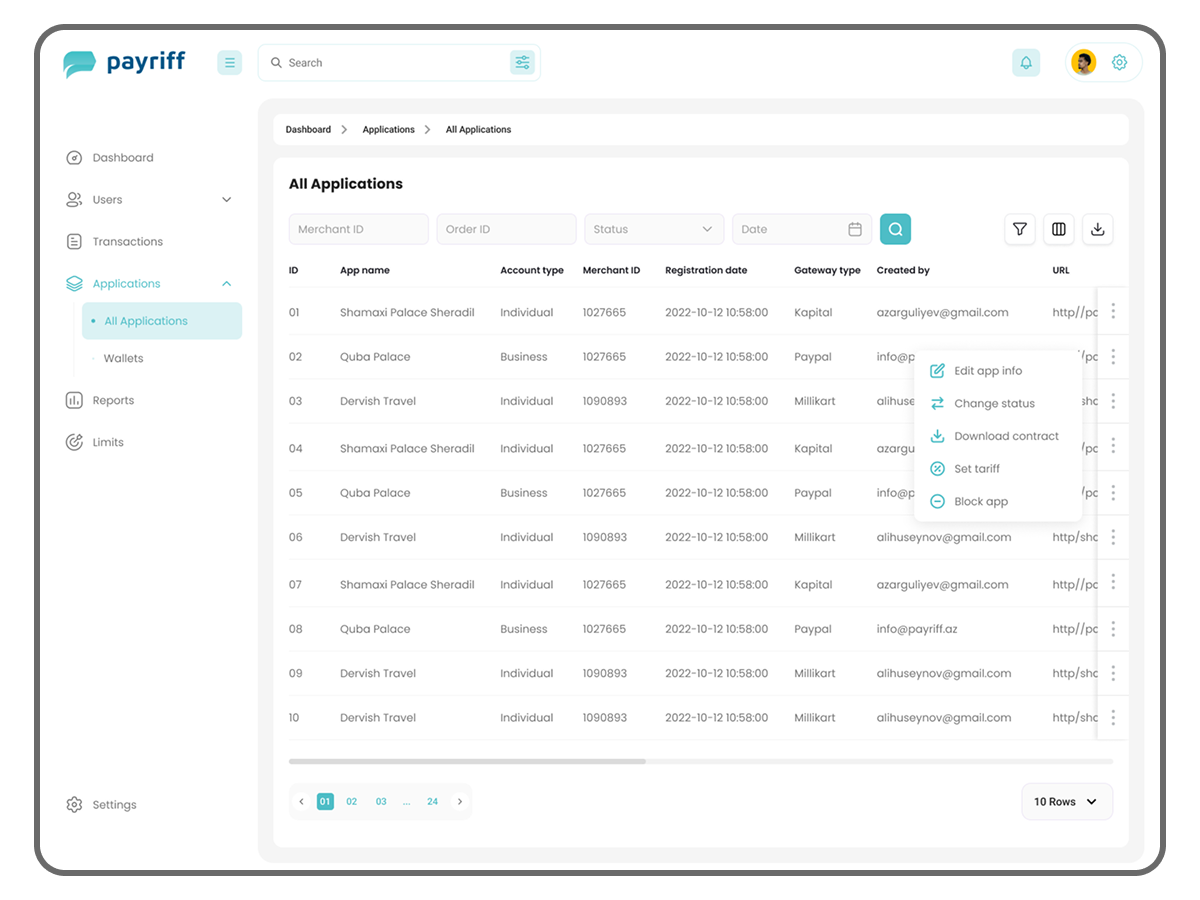
Internal CRM
A workspace for Payriff’s internal team to manage merchant applications and accounts. Search, filters and contextual actions bring everyday tasks such as updating details, changing statuses and accessing contracts into one place.
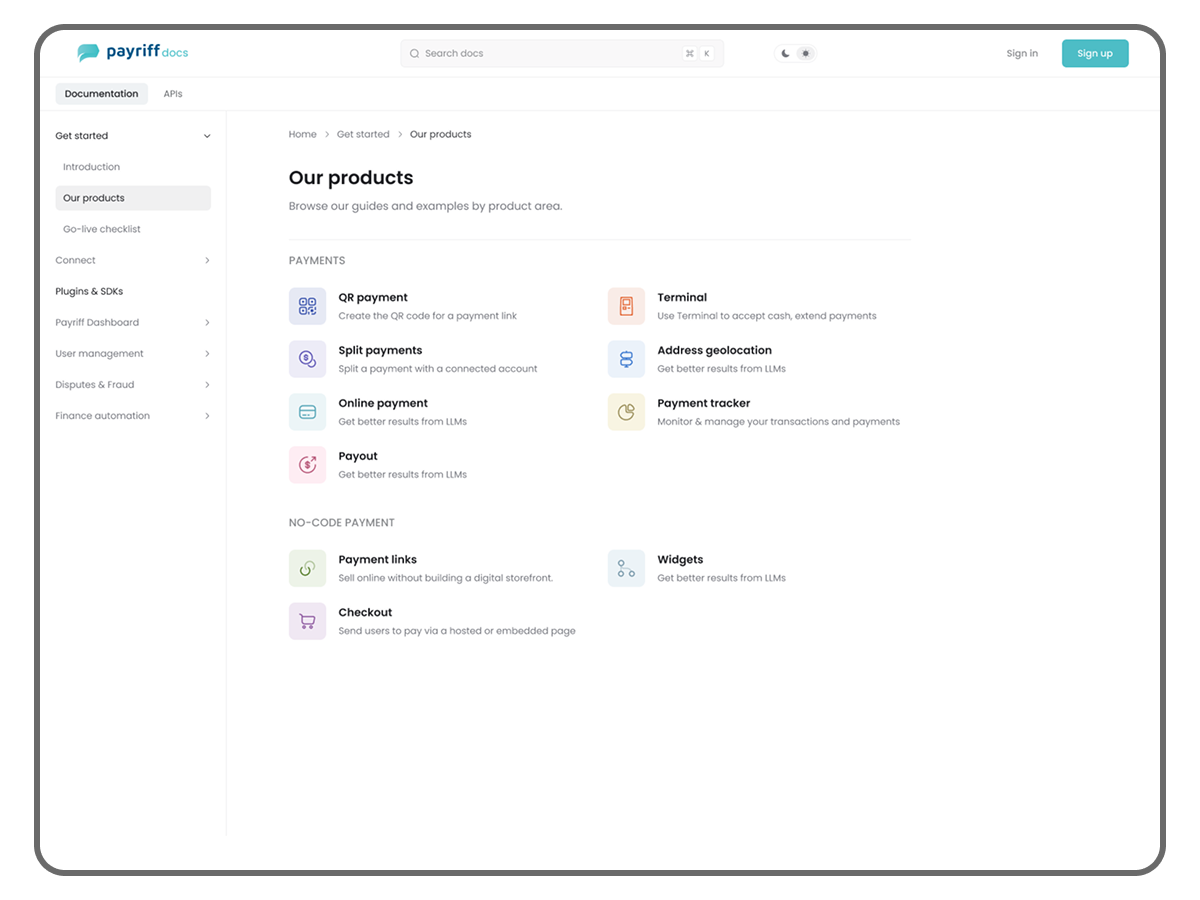
Documentation Platform
A dedicated place to explore Payriff’s products and find integration guides. Clear navigation and product categories organise the documentation around what businesses and developers need to get started.
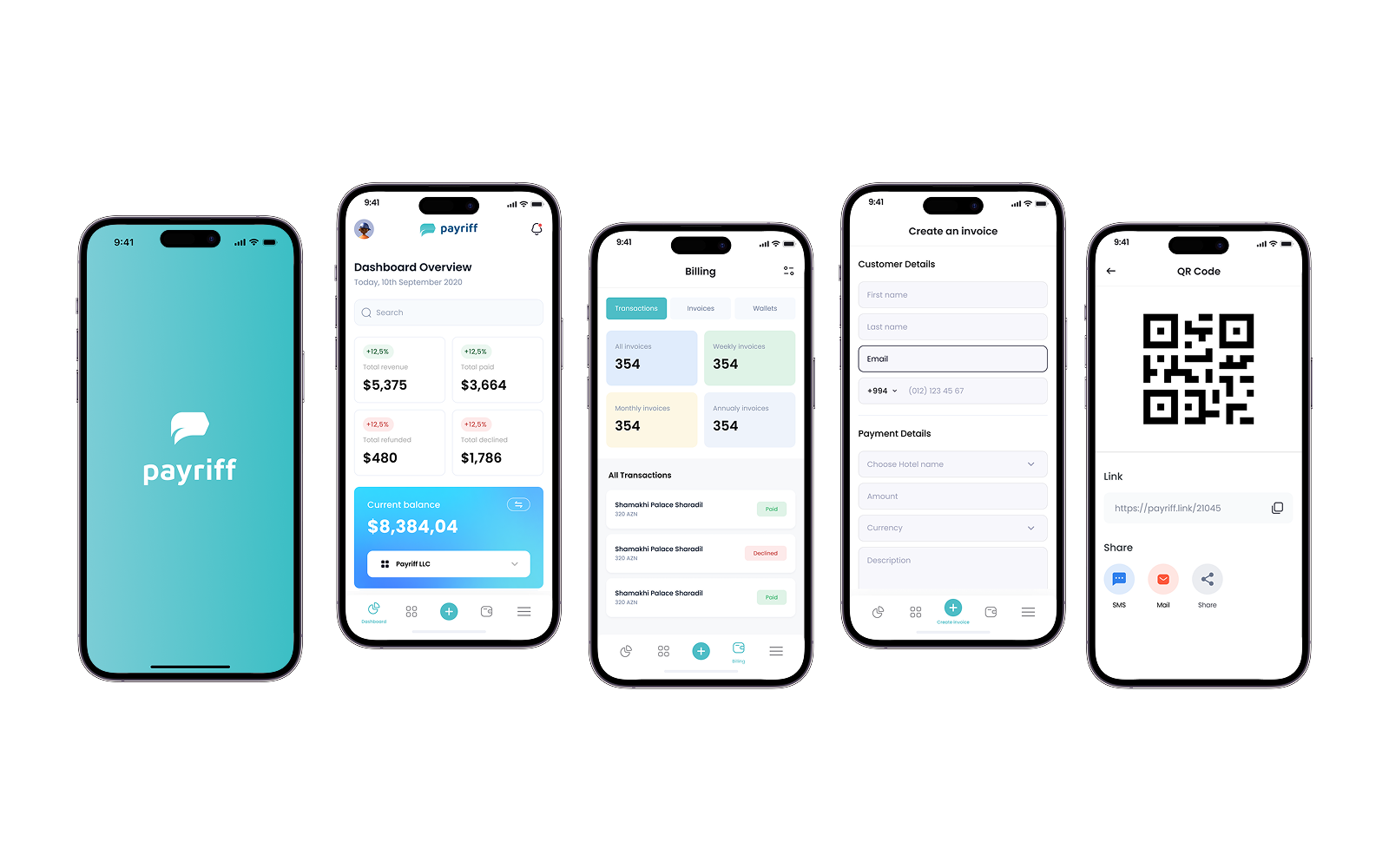
Mobile App
Payriff’s merchant tools adapted for mobile. The app brings payment activity, balances and invoicing together, allowing business owners to check transactions, create invoices and share payment links from their phones.
Before / after — drag to compare
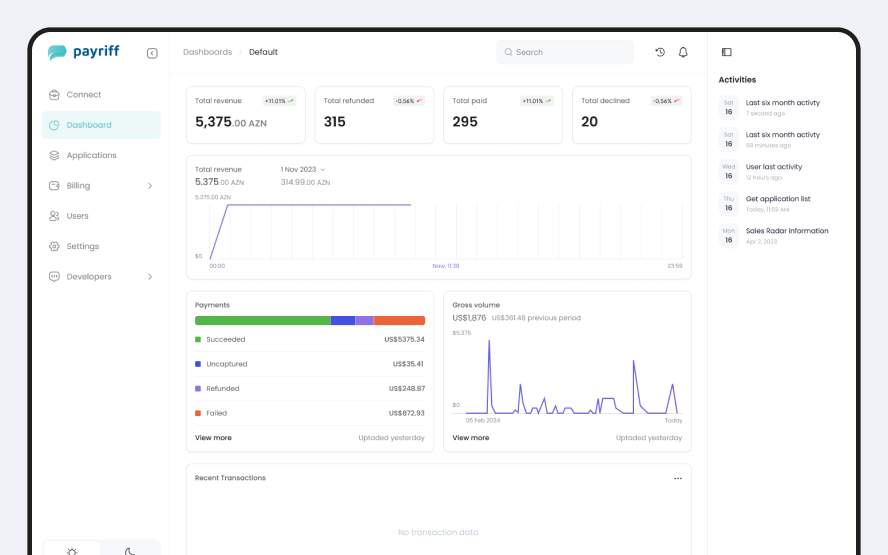
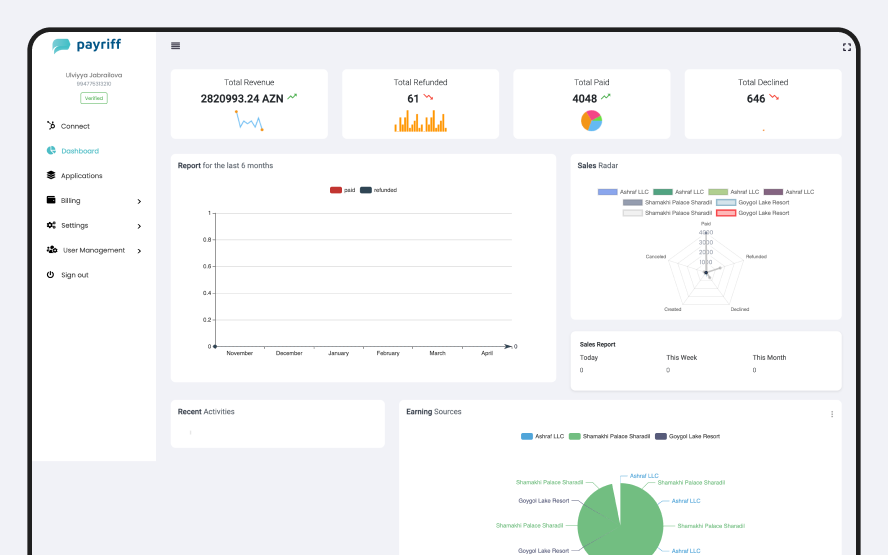
The merchant dashboard redesigned with a clearer hierarchy, more consistent components and a dedicated view of recent activity.
05
Learnings
- 01Shared foundations — reuse components while allowing each product to meet different needs.
- 02Clear priorities — organise financial information so the overview and detailed records are easy to distinguish.
- 03Beyond appearance — revisit how tasks work alongside how the interface looks.
- 04An evolving system — refine shared components as new product requirements emerge.